
Rail Freight Returns to Ward’s Nottingham Site to Support Sustainable Transport of Metals
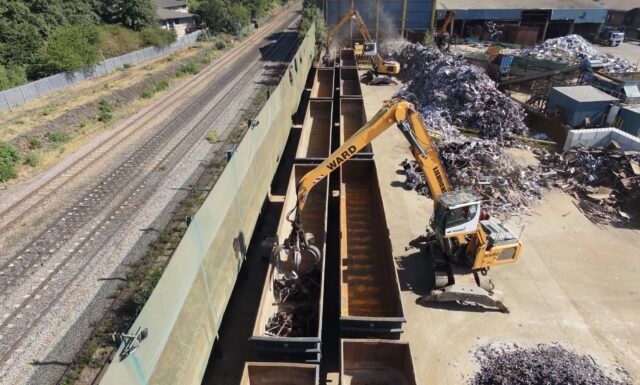
Metal recycling and waste management specialist Ward has resumed rail operations at its metal processing site in Nottingham for the first time in more than four years, providing a more sustainable transport option for bulk ferrous metals and helping to reduce reliance on road haulage.
Following Ward’s acquisition of the site earlier this year, working in partnership with GB Railfreight (GBRf), rail operations first returned to the Nottingham site in August 2026, restoring an important transport link that had been inactive under previous owners since April 2022.
The reopening marks a significant step in expanding the use of rail in bulk handling of processed scrap metal efficiently from the Nottingham site to downstream steel industry facilities. The site is now transporting a range of ferrous scrap grades from the site.
Thomas Ward, Commercial Director at Ward commented: “As the demand for recycled metals continues to play an important role in the transition towards a more circular economy, efficient and lower-carbon transport infrastructure is essential to ensuring scrap metal can be moved reliably to where it is needed.
“The return of rail freight offers significant potential environmental and logistical benefits. Each train can transport up to 1,800 tonnes of material per day, equivalent to taking approximately 72 articulated lorries off the road.
“Rail also provides a more direct route into receiving facilities, helping to reduce the number of vehicle movements required within sites and supporting more streamlined material handling.
“By combining our on-site processing expertise and working with GBRf as a dedicated rail freight partner to reinstate established material supply routes we can provide a robust link between scrap metal collection, processing and the steelmaking supply chain.”
Transferring bulk metal movements from road to rail can help reduce road congestion, deliver lower transport-related carbon emissions, improve road safety and improve the efficiency of moving recycled materials between processing sites and steel industry customers.
Material for the Nottingham rail operation is sourced from Ward’s 12 sites across the country. Before loading, all materials and incoming scrap are quality checked to ensure they meet the required specifications and is then loaded onto rail wagons using 360-degree mobile cranes and loading shovels, enabling the site to handle substantial volumes efficiently while maintaining quality control throughout the process.
Phil Amos, Head of Energy & Industrial, GBRf said:
“It’s fantastic to see freight trains moving out of Nottingham again. Bringing rail back into a site like this is exactly what we want to be doing: moving more material by rail, taking lorries off the road and giving customers a smarter, more efficient way of getting their goods where they need to go.
“There’s huge potential for rail in the movement of recycled metals, and we’re really pleased to be working with Ward to get this traffic back on the railway.”
Fourth generation family business, Ward, is the third largest independent metal recycling and waste management company in the UK. Its operations contribute to environmental sustainability by reducing waste and promoting the reuse of valuable materials. Driven by an aim to divert 100% of material from landfill, Ward has invested in creating some of the most advanced waste plants in the UK and increased its portfolio to 12 news sites nationwide, with the recent acquisition of four news sites in Nottingham, Barnsley, Huddersfield and Castleford.
The Nottingham site is once again contributing to the movement of recycled metals by rail, helping connect suppliers with steel industry destinations while making better use of the UK’s rail freight network.
For more information about Ward’s metal recycling and waste management solutions, visit www.ward.com.
Share this on:


