
From Fibre to Finish: Making Textiles Truly Sustainable
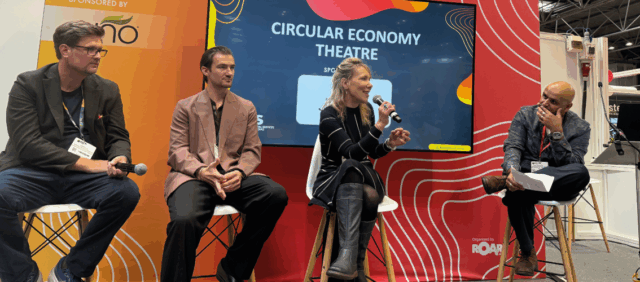
Ward’s Head of Head of Textile and Vehicle Recycling, Clare Harby, took part in a session discussing the future of textile recycling at this year’s RWM Show and ESS Expo.
Clare featured on an expert panel chaired by Mohammed Patel, Membership Manager at UKFT which also included James Kay, Regional Waste Coordinator at Resource Efficiency Wales and Brett Staniland, Sustainable Fashion Campaigner.
The 45-minute session in RWM’s Circular Economy Stage addressed the question; What does real sustainability look like in a global textile system built on speed, volume and waste?
With sustainability now a default part of most brand strategies and, with increasing scrutiny from regulators, investors and consumers the panel explored what, if anything, is actually changing on the ground in the world of textile reuse?
From the structural barriers to circularity and the limitations of recycling, to the role of regulation, infrastructure, trade, and global responsibility, the candid discussion covered all elements of the fashion and textile value chain and looked at how the industry can move from ambition to action, focusing on:
- How brands, manufacturers and innovators can align commercial realities with environmental responsibility
- The true costs of scaling circular models and who should carry them
- Why reuse and reduction must sit alongside recycling in any credible strategy
- The role of global trade, especially in relation to reuse markets in the Global South
- What policy — from ESPR to EPR —getting it right and what’s being missed?
Seeking Sustainability
The panel agreed sustainability was an overused term and many big brands were only partially implementing sustainable principles int their practices, with a disconnect between narrative and practice. For large fashion brands, there is disconnect between over production and design with low quality material, while all retailers have a ‘re-sale’ or ‘pre-loved’ to appear sustainable.
It was suggested that things are actually going backwards, with fast fashion and online shopping, production has increased by 60% in last 15 years but clothing is lower quality, made from mixed fibres with embellishments that can’t be recycled or last for more than a couple of washes. One shocking trend cited was the increase in buying new clothes, suggesting that it an individual buying on average 12 items per year in the 1980s to has increased to 70-80 items a year in 2025.
Sustainable Solutions
The general consensus what that as a society we need to keep things in use for longer and not ship the problem of poor quality textiles overseas, where 70% global population rely on second hand clothing. Panellist suggested that the Global North was at risk of pushing unfit textiles to Global South, giving examples of markets in Ghana discarding waste in landfill and burning, as the materials purchased for onward sale were not fit for purpose.
James Kay, Regional Waste Coordinator at Resource Efficiency Wales explained how sustainability is firmly embedded in devolved Welsh Authority. Initiatives such as a Repair Directory and kerbside collections are changing consumer habits and encouraging people to keep things for longer. The circular economy is now taught in the curriculum in Wales from as early as age 5, to help retain lost skills and build awareness and understanding.
Who is going to pay for circularity?
As well as changing consumer habits to encourage a reduction in consumption or driving up the demand for higher quality, natural materials, other ways to foot the bill were discussed.
Extended producer responsibility (EPR) schemes or Ecodesign for Sustainable Products Regulation (ESPR) offer major opportunities to tackle textile reuse and recycling issues.
Designer and producer pays schemes offer potential to improved the situation, however, in the current system designers not in talks with recyclers to understand what needs to be designed in our out.
Essential sorting, segregating, separating, grading and classifying waste is a skilled role and those doing it well should be acknowledged for it. Another consideration for encouraging circulatory was to include the question in pre-qualification questionnaires for tenders, so that off takers of waste textiles were documented and accountable.
What’s the solution?
The discussion looked at what’s working, what isn’t and what it will take to deliver meaningful progress in sustainability — not just at the margins, but at scale. The final question of the session asked; “What would be a single ask for the UK Government”?
Responses included banning ads for fast fashion, banning the gamification of consumerism, enforcing heavy penalties that have an impact for those who are in breach of regulations and quality standards.
In conclusion, the panel said a multi decade vision that is easily explained to the public, that the Government care about it was needed. Firm policy, strict and prudent, which makes sense from cradle to grave and is policed accordingly.
Find out about Ward’s textile reuse and recycling team, WARDRobe at: ward.com.
Meet the panellists…
Mohammed Patel, Membership Manager at UKFT
Mohammed has over 19 years’ experience in the collection, sorting, and processing of used clothing. A skilled contract negotiator, adept at working closely with charities, local authorities, reuse and recycling merchants to agree quality standards and build fair, sustainable partnerships. He is now focused on supporting UKFT members with legislative insight, site audits, trade representation, and the development of implementation codes of practice.
Actively engaging with UK Government bodies, UK Textiles Pact’s Reuse and Recycling Group and wider industry forums to ensure the used textile industry has a strong voice in policy, regulation, and the transition to a circular economy.
Brett Staniland, Sustainable Fashion Campaigner
Starting his career in the modelling industry over ten years ago, Brett quickly navigated to the sustainability and luxury space. He uses his platforms to raise awareness around the realities of the fashion industry, offering critical insights and perspectives. He has contributed as a journalist and writer alongside interviews for leading publications all over the world.
In the past year he has contributed to a Netflix documentary, consulted for brands on their sustainability goals and messaging, and continue to write, lecture and educate on topics surrounding sustainable fashion. As a result of my impact, he was recognised in Elle Magazine’s Green List of influential figures in sustainability.
He is now a retail ambassador for the British Heart Foundation, UK ambassador for World Vision and Global Ambassador for Graduate Fashion Week.
Sustainability overused. Two steps forward and one steps back. Started in the underbelly of fashion with modelling.
James Kay, Regional Waste Coordinator at Resource Efficiency Wales
James has spent his career at the crossroads of collaboration, innovation, and waste management. For more than a decade, he’s been the Regional Waste Coordinator for most of Wales’s local authorities. This role exists solely to unite councils in their shared mission to improve resource efficiency.
The councils he represents form the CLAIRE Wales Group, and in 2010, James led them through a landmark tender for regional textiles reuse and recycling contract. That decision didn’t just change how Wales handled its clothing, it disrupted the UK’s textiles market and set new expectations for how public sector collaboration could reshape an industry.
Never one to sit still, in 2018 James co-founded Resource Efficient Data. RED is the UK’s first waste data flow insights company, bringing unprecedented clarity to what happens to municipal waste and giving businesses the intelligence to act more sustainably.
A Chartered Waste Manager and Fellow of the Royal Society of Arts, James is as comfortable talking about the circular economy as he is walking his golden retriever along the Welsh coast. For him, waste isn’t just a challenge to solve, it’s an opportunity to rethink how we use, value, and keep our resources in use for longer.
Clare Harby, Head of Textiles and Vehicle Recycling at Ward
Clare Harby heads up the Textiles division at Ward, a family run waste management business based in Derbyshire. With over 20 years’ experience working in both the charity and for commercial sector.
Specialising in reuse and finding a new home for pre-loved items, Clare uses that expertise to manage the textile department which processes over 400 tonnes of clothing and household material every month.
Clare is passionate about exploring all options for pre-loved clothing and textiles. Following the principals of the waste hierarchy with reuse being the primary route for end-of-life material. Fashion, clothing and shopping both on the high street and online is now part of many people’s lives but Clare hopes that through education that more people will think about each piece of clothing they buy and own, how we wash it, wear it and how we manage it when it is no longer wanted.
Share this on:


